effective listening

A powerful secret weapon for positively impacting others

A powerful secret weapon for positively impacting others

How do you help someone know that you value them and want to encourage them?


What is your go-to method for positively impacting someone?


Chances are, you do this in ways others have encouraged and positively impacted you. Perhaps it’s through a conversation (one-on-one time), a note (email or handwritten), or a gift (a small token of appreciation). 


All of the above examples are good ways to recognize and appreciate someone – and truthfully, they are ways that I appreciate people weekly. 


However, there is one way to positively impact and encourage someone that is even more significant. And – it’s something you can do every day!


What is it? 
Why GREAT leaders are often GREAT listeners👂

Why GREAT leaders are often GREAT listeners👂

Have you ever wondered why great leaders are often great listeners?


The answer is simple.


The most outstanding leaders understand the foundational human need we share for love and belonging -- and listening is one of the most incredible acts of love we can show another person.

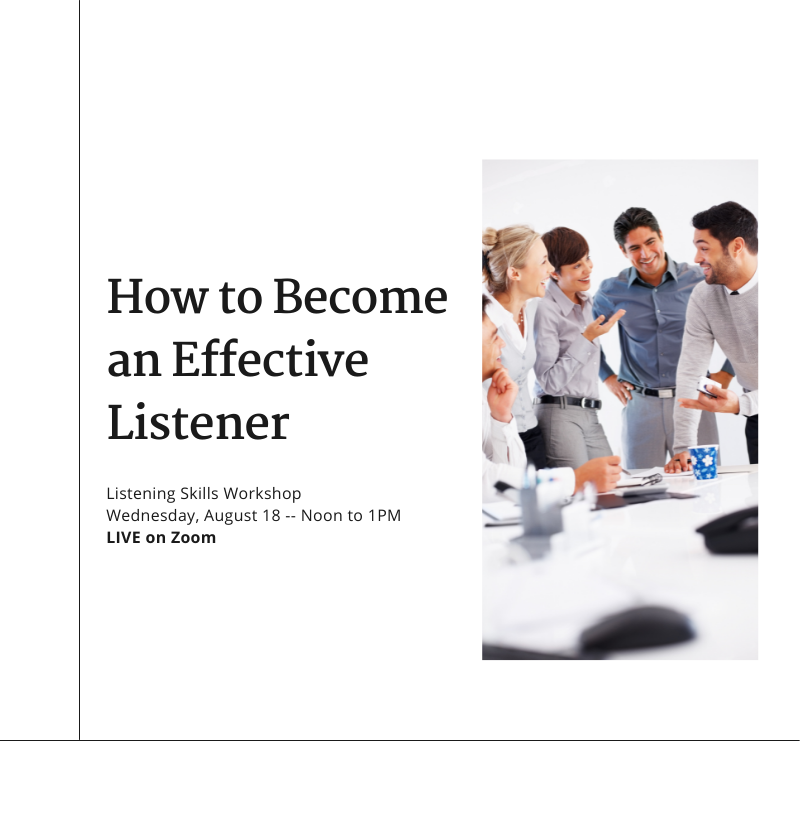
How to become an effective listener (full webinar replay!)

How to become an effective listener (full webinar replay!)

Is this how you look when you're trying to get through to someone else? Worse yet, is this how someone looks when they're trying to get through to you?

We have this misconception that because we "can" communicate, we actually "are" communicating. However, communication (and even more so effective listening) requires great skill to master.

I love what George Bernard Shaw says about communication. He writes, "The single biggest problem in communication is the illusion that it has actually occurred."

What makes a good leader? 👂

What makes a good leader? 👂

Most people agree -- the top trait that effective leaders share is effective listening!

Why is this? It is because leaders lead people. And to lead people, you need to be able to move them from A to B -- from where they are to where they need to go. So how do we do this? We lead people by effectively communicating with them.

Well, what makes up effective communication?